Cities, classrooms and culture shock: two Built Environment students on teaching in China

Cities, classrooms and culture shock: two Built Environment students on teaching in China

05/19/2026 - 08:46

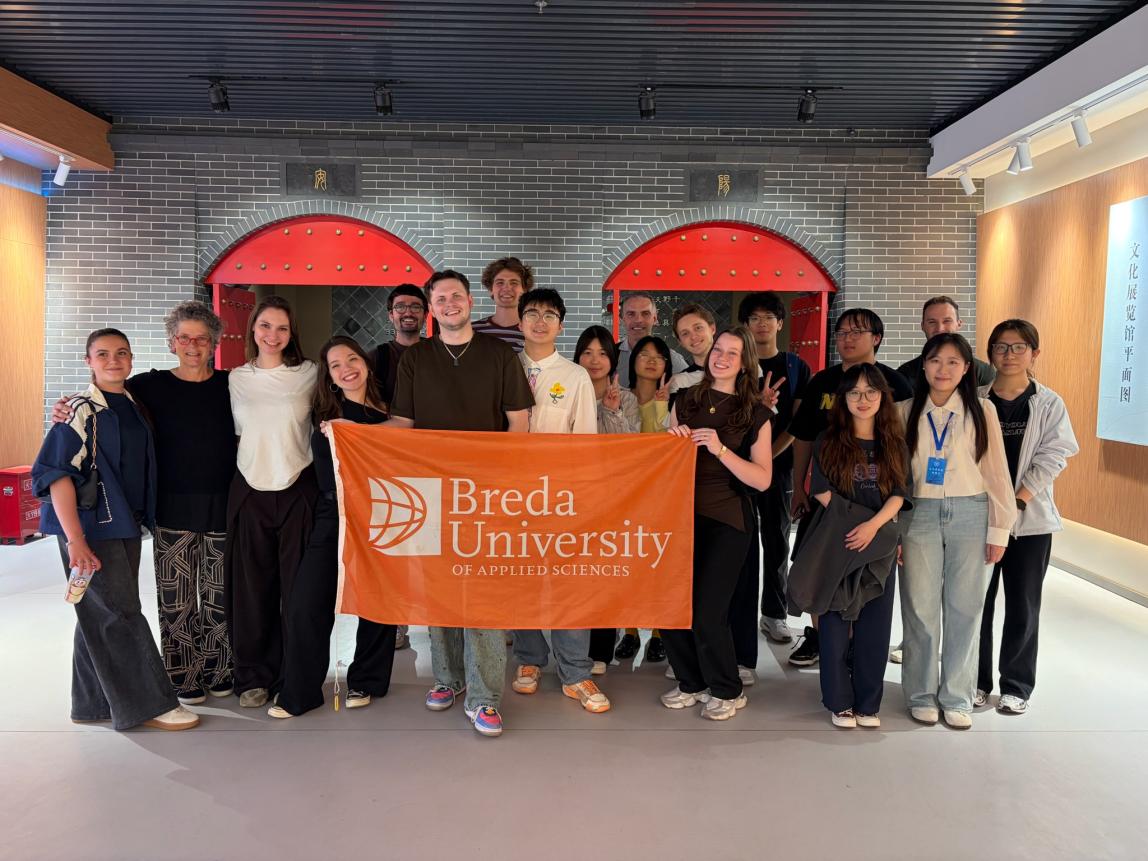
Marijn Bos and Marcos Silva are third-year Built Environment students, taking part in BUas' collaboration with Anyang Institute of Technology (AIT) in China. As part of the BUas / Anyang Teaching Exchange, they were two of eight students who travelled to Anyang alongside Built Environment lecturers earlier this year, spending two weeks on campus as student teaching assistants. We caught up with them to hear what the experience was really like.
Built Environment
  • Expertise
  • Student work

Meet the students

Marijn: 'I am in the Dutch track, specialising in urban design. What drew me to it is the design side of working with cities, visualising them from their existing context towards something new. Envisioning what a city might look like for the next generation, essentially.'

Marcos: 'I am in the international track, also in my third year. I chose urban planning because I have always been very interested in politics and find development policies fascinating.'

How did you find out about the trip, and what motivated you to apply?

Marcos: 'We received an e-mail that went out to the whole third year, asking whether anyone would be interested in joining a trip to Anyang. We had to fill in a short form and a brief motivation letter. Four places would go to students from the international track and four from the Dutch track.'

Marijn: 'For me the link was clear with my lab project, which focused on cities of the future. I kept thinking about how places in the Netherlands might look in decades to come, and a lot of people say certain major Asian cities represent that future. That, combined with the chance to communicate with students from a completely different culture, made it very compelling.'

Marcos: 'I had never left Western Europe before, so my world was quite small. I have always been fascinated by Chinese culture and language, so it really felt like an opportunity of a lifetime.'

Walk us through a typical day during your two weeks at AIT. What did the programme look like?

Marcos: 'On a typical day we began with Photoshop sessions from eight until twelve, helping second-year AIT students learn key tools. Then in the afternoon, from half past two until half past six, we ran sessions based on the M4H site, a former harbour area in Rotterdam which needed to be re-designed, giving students a condensed version of the lab-projects we work with at BUas.'

Marijn: 'Mostly our role was to move around the classroom, make contact with the students and help wherever we could. They call this period "foreign teacher week", and the intensity of what those students produced in two weeks was genuinely impressive.'

Did you notice any cultural differences in the way teaching and learning happens at AIT compared to BUas?

Marcos: 'The teaching style is fairly traditional and lecture-based. What struck me was the heavy use of phones. I spoke to one student who explained that with China's population shrinking, job opportunities are becoming scarcer, so some students struggle to stay motivated. It was quite sobering to hear that perspective directly.'

Marijn: 'The phones were noticeable, but even students who seemed distracted had captured everything said in class. The bigger difference for me was in how they approached the design assignment. Where we think about mixing uses and creating layered neighbourhoods, they were much more inclined to zone things out strictly. When we discussed incorporating various uses within a single building, it seemed like new information to them. It really showed how planning culture shapes the way you see space.'

Did you also have time to explore Anyang and experience the city yourselves?

Marijn: 'Yes, we had a two-and-a-half-hour break each day, which gave us time to explore the campus or walk around the old city centre. You would suddenly come across a group of elderly people dancing to music in the open air. We actually joined in at one point. Those spontaneous moments were just fascinating.'

Marcos: 'The campus itself was extraordinary in scale: two athletics tracks, basketball and tennis courts, around twenty canteens. We ended up playing tennis with an AIT student after a conversation in the canteen, and on one of the last days a student took me around on his electric scooter before we had dinner together. Very spicy, absolutely delicious.'

What was your biggest culture shock outside the university?

Marcos: 'The toilet situation, honestly. Squat toilets, sometimes without locks on the stalls. Though interestingly, upgrading sanitation is listed as a priority in China's latest five-year plan.'

Marijn: 'For me it was the non-verbal communication. In southern Europe you can rely on gestures and a thumbs up to fill gaps when language fails. In China those cues simply do not exist in the same way. You develop your own system of sounds and signals over the days, but it is a very different kind of communication.'

What advice would you give to future Built Environment students who might have the chance to take part in this collaboration?

Marijn: 'The lecturers told us they could not prepare us for what we would see, and we thought, just tell us what to expect. By the end of the trip I completely agreed. You simply cannot be prepared. You just have to roll with it and stay open-minded.'

Marcos: 'Be genuinely open-minded. Enjoy the food, take note of how the cities function. Do not resist the unfamiliarity, because that is precisely where the most interesting things happen.'